
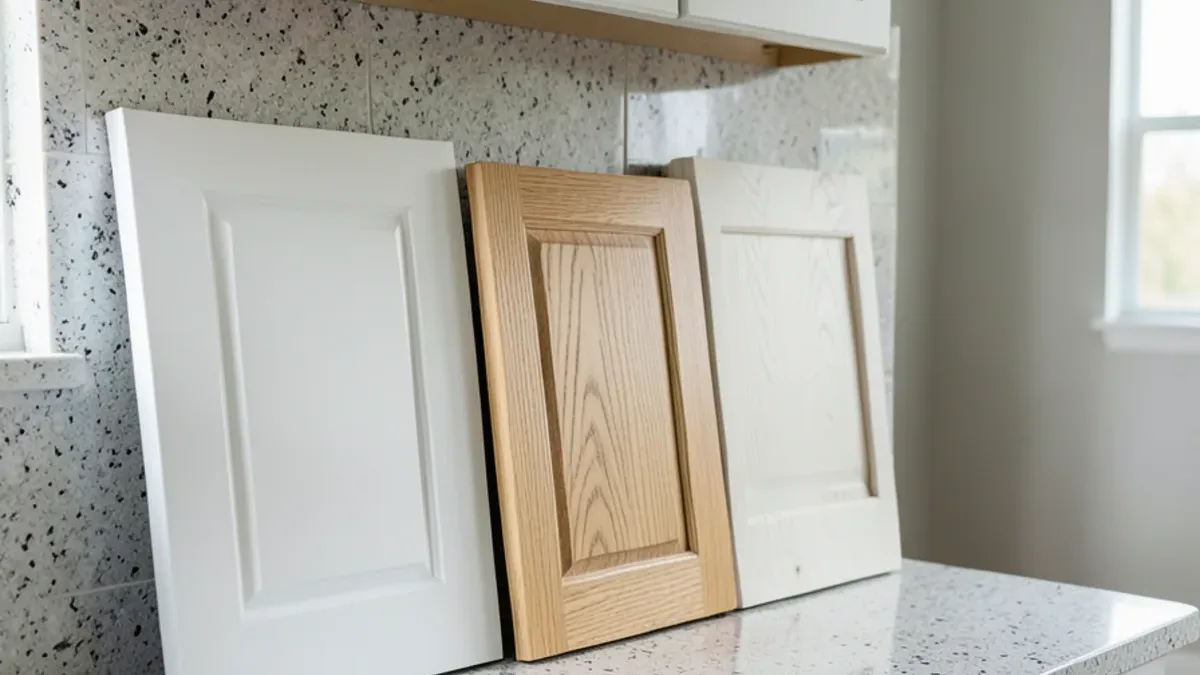
Custom vs semi-custom cabinets is mostly a question of how much flexibility your kitchen needs. Stock cabinets come in fixed sizes and finishes, semi-custom cabinets start from a catalog but let you change sizes, doors and colors, and custom cabinets are built entirely to your room. Price, lead time and fit follow that same order.
Stock, Semi-Custom and Custom Cabinets at a Glance
The three tiers differ in sizing, materials, finish choices and lead time. This table compares them in practical terms.
| Stock | Semi-custom | Custom | |
|---|---|---|---|
| Sizing | Fixed widths, usually in 3-inch steps | Catalog boxes with width, depth and height changes | Any dimension the room needs |
| Box materials | Often particleboard or thin plywood | Particleboard or plywood options | Specified by you and the maker |
| Door styles | A short list | A broad catalog | Anything that can be drawn |
| Finishes | Standard colors | Many colors, some custom matching | Any color, species or technique |
| Lead time | Shortest | Moderate | Longest |
| Fit in an older home | Needs more filler strips | Fewer fillers | Scribed to the walls |
For price context, HomeLight (January 2026) gives national installed averages of $100 to $300 per linear foot for stock, $200 to $650 for semi-custom and $500 to $1,200 for custom. Those are national figures, not our quotes. The same guide puts semi-custom lead times at four to eight weeks and says stock can often be had the same day or soon after; custom typically runs longer than semi-custom because nothing is built until drawings are signed.
Planning a Kitchen Cabinets Project?
Six Design Group designs and builds kitchens, baths and floors from Lake Highlands. Call to talk through your home and get a written scope.
- 34 Google reviews
- Design and build under one team
- Based in Lake Highlands, Dallas
- Mon–Fri 9 am–5 pm
How Do Semi-Custom Cabinets Differ From Custom?
Semi-custom cabinets are built to order, but from a defined catalog of boxes, doors and finishes. You choose from many options and the factory builds what you selected. Custom cabinets are drawn for your specific room and built from those drawings.
Where that difference shows up:
- Dimensions. Semi-custom lines often allow width and depth changes within limits. Custom work can match a 31-and-a-quarter-inch gap exactly.
- Inset doors. True inset construction, with doors set flush inside the face frame, is a custom strength. Some semi-custom lines offer inset, usually at a premium.
- Special pieces. Furniture-style islands, curved ends, built-in hutches and hood surrounds are easier in custom.
- Changes after order. Semi-custom changes go through the factory's system; custom shops may be more flexible early in the build.
Framed or Frameless: A Second Choice Inside Every Tier
Each tier comes in two constructions, and the choice affects storage as much as looks. Framed cabinets have a solid-wood face frame glued to the front of the box; doors hinge on that frame, and the frame stiffens the box. Frameless cabinets, sometimes called European style, drop the frame, mount hinges inside the box sides and are usually laid out on a 32-millimeter grid of holes for shelves and hardware.
- Framed suits traditional, shaker and inset looks, and it hides small wall irregularities behind the frame's edge.
- Frameless gives full access to the box, so drawers and roll-outs run wider for the same cabinet width.
- Frameless also demands flat, plumb installation, because there is no frame to absorb a slab that has shifted.
Our custom cabinets service page covers how drawings, finish samples and field measuring work on a built-to-order kitchen.
When Stock Cabinets Make Sense
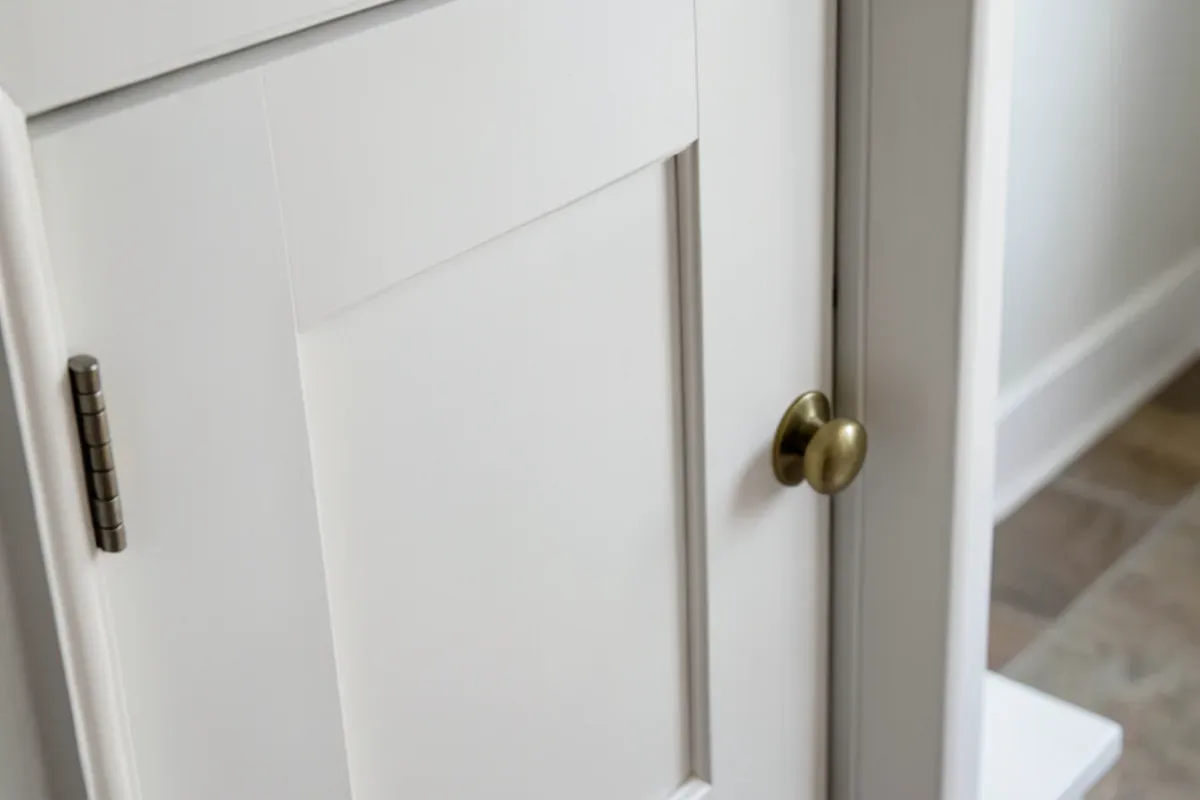
Stock cabinets make sense when speed and budget lead and the room is simple. A laundry room, a garage, a rental unit, or a kitchen with straight walls and standard ceilings can all be planned well in stock sizes.
What the Box Is Made Of
The panel inside the doors matters in every tier, and each common material behaves differently:
| Panel | How it is made | Strength | Weakness |
|---|---|---|---|
| Particleboard | Wood particles pressed with resin | Flat, stable and inexpensive | Weak screw holding; swells and crumbles once wet |
| MDF | Fine wood fibers pressed with resin | Very smooth, ideal under paint | Heavy; edges swell if water gets past the finish |
| Plywood | Thin wood veneers glued in alternating grain directions | Holds screws, resists sagging, lighter | Costs more; face veneer can chip at cut edges |
Stock lines lean on particleboard, semi-custom lines usually offer a plywood upgrade, and custom makers build with whatever you specify.
The compromises of stock are fit and finish. Because widths come in fixed steps, a run rarely lands exactly on the wall, so filler strips take up the gaps. Box materials and finishes are more limited, and door options are fewer. Composite wood used in cabinets sold in the U.S. must meet EPA formaldehyde emission standards regardless of tier, so ask about construction, not just compliance.
Which Cabinet Tier Fits Which Kitchen?
Match the tier to the room and to how long you plan to stay. A few rules of thumb:
- Staying ten years or more in a kitchen you use hard: semi-custom or custom with plywood boxes and solid drawers.
- Odd dimensions, sloped ceilings or walls out of square: custom, or semi-custom with generous modifications.
- Inset doors or furniture details are the look you want: custom.
- Tight timeline or rental property: stock or quick-ship semi-custom.
- A mix: semi-custom perimeter with a custom island or hood.
What Our Project Leads See in Plano and Frisco Kitchens
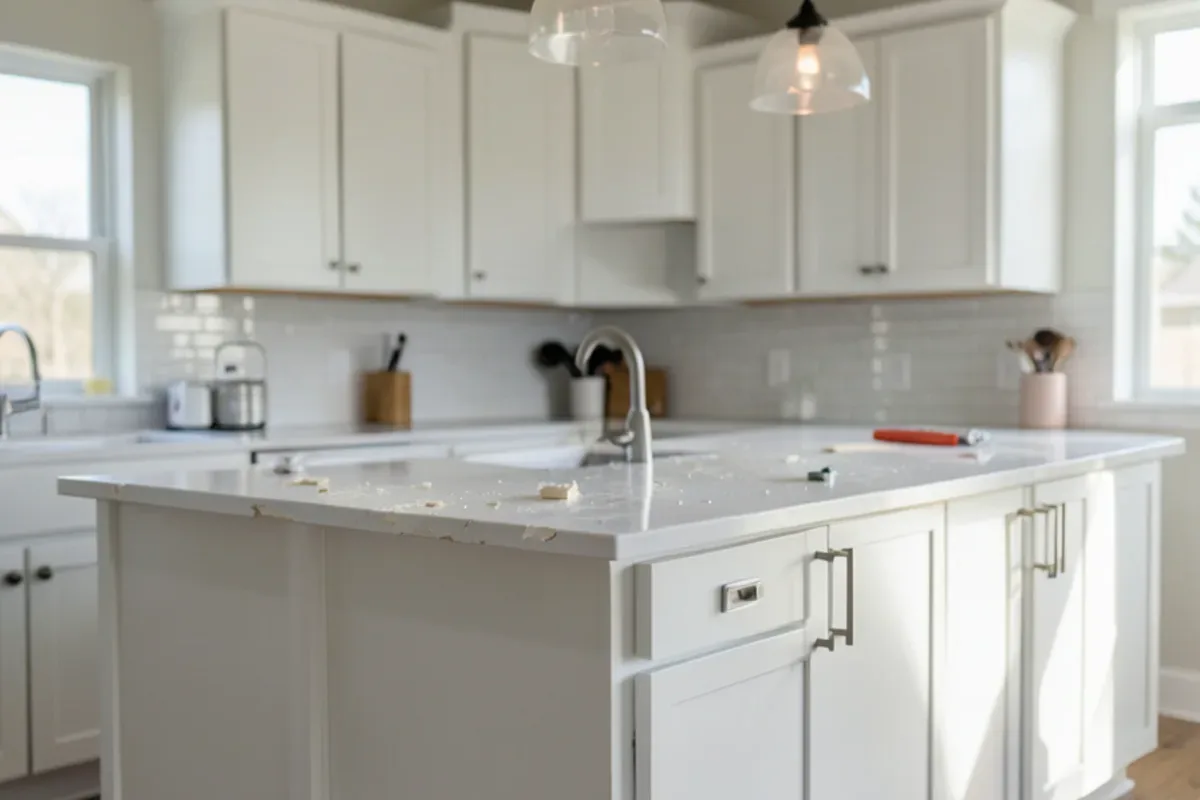
The age of the house shapes the answer more than taste does. In east and central Plano, 1970s to 1990s neighborhoods such as Los Rios often have original cabinets and walls that have moved a little over the decades. Semi-custom cabinets with modifications fit many of these kitchens; where walls are badly out of square or a soffit is being removed, custom pieces solve the leftovers.
In Frisco, 2000s to 2020s homes often have builder-grade cabinets in otherwise good, straight rooms. Owners there frequently upgrade to semi-custom for better boxes and finishes, and save custom work for the island or a built-in.
A pattern that applies everywhere: the cabinet tier matters less than the box and drawer construction inside it. A well-built semi-custom cabinet will outlast a poorly built custom one.
Questions to Ask Any Cabinet Supplier
The same questions separate good cabinets from weak ones in every tier:
- What are the box sides, back and bottom made of, and how thick are they?
- Are drawer boxes dovetailed, doweled or stapled, and what slides are included?
- Is the finish sprayed and cured in a factory or shop, or applied on site?
- Which sizes can be modified, and in what increments?
- What is the current lead time from signed drawings to delivery?
How to Compare Two Tiers Fairly
Quotes from different tiers only compare when they describe the same kitchen. Run the comparison this way:
- Fix the layout first, with appliance sizes chosen, so every quote prices the same boxes.
- Write one specification: box material, drawer construction, slide type, door style and finish.
- Ask each supplier to quote that spec, and to list every item they had to change to fit their catalog.
- Count the fillers and modifications each tier needs; many fillers in stock or semi-custom are a sign the room wants custom.
- Compare lead times against your demolition date, not against each other.
The honest trade-off: custom buys fit and freedom, not automatic quality. Where a room is square and standard, the premium for custom pays for flexibility the kitchen may never use.
Choosing With Confidence
Start by listing the dimensions and details your kitchen cannot compromise on. If everything fits a catalog, semi-custom usually gives the best value. If it does not, custom pays for itself in fit. For a breakdown of what drives price inside each tier, read our guide to custom cabinet cost in Dallas, and see all of our kitchen cabinet services to request an estimate.
Quick Answers on Custom Vs Semi Custom Cabinets
Is semi-custom good enough for a high-end kitchen?
Can I mix custom and semi-custom cabinets in one kitchen?
Which cabinet type has the shortest lead time?
Will custom cabinets add more resale value than semi-custom?
Sources
Written by the Six Design Group team
Design-build remodelers based in Lake Highlands, Dallas. We plan and build kitchens, bathrooms, floors and whole-home remodels across Dallas-Fort Worth.