
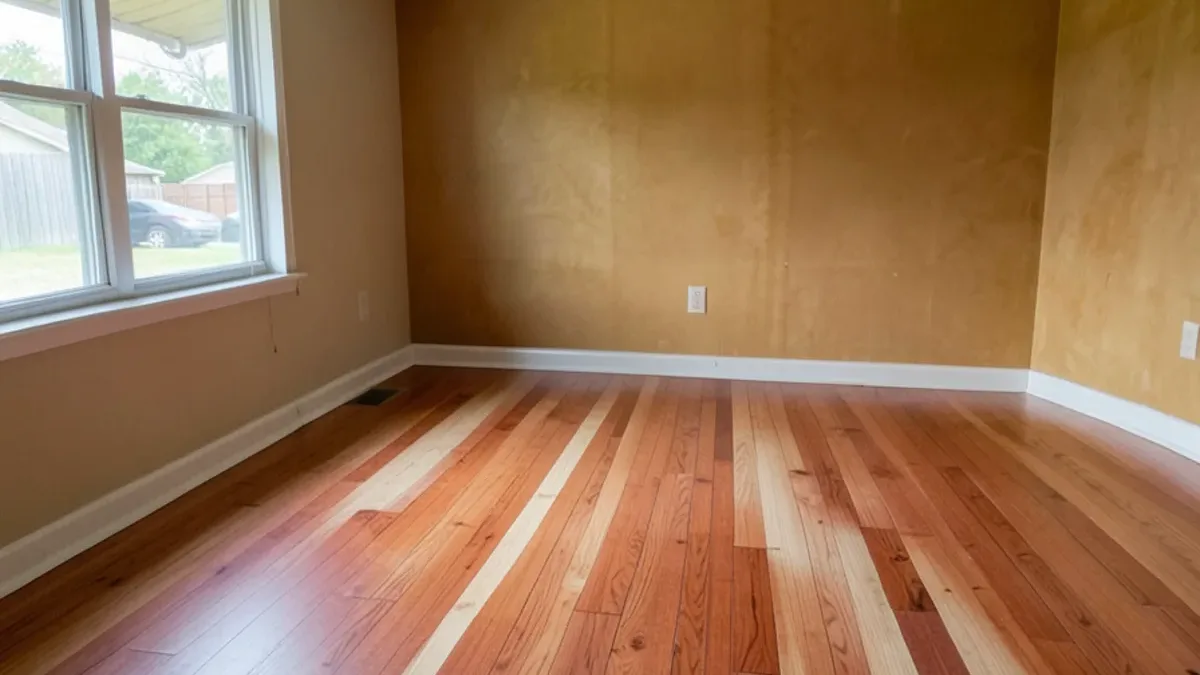
Whether to refinish or replace hardwood floors depends on what is left of the wood. If the boards are thick enough to sand, firmly attached and free of deep water damage, refinishing brings them back with far less disruption. If the wood is worn thin, rotted or stained black through, replace it. Most worn floors can be refinished.
Below: the signs on each side, the refinish levels, finish choices compared, and how Dallas humidity and foundations affect the call.
Refinish or Replace Hardwood Floors? Signs Refinishing Will Work
Most hardwood floors that look tired are good candidates for refinishing, because wear usually lives in the finish, not the wood. Look for these signs:
- Scratches, dull traffic paths and gray areas where finish has worn through
- Surface stains that have not soaked deep into the wood
- Boards that are tight and firmly attached, with only small seasonal gaps
- Enough wood above the tongue for another sanding
A quick check: remove a floor register and look at the edge of a board. On solid hardwood, you can see how much wood sits above the tongue. If there is a healthy layer, the floor can be sanded.
A five-minute floor check before anyone quotes
- Read the board edge at a register: measure the wood above the tongue on solid floors, or the top veneer on engineered.
- Drop water on a worn traffic path. If it beads, finish remains; if it darkens the wood quickly, the finish is gone there.
- Look across the floor in low light from a window. Cupped boards show as ridges along their edges; crowned boards bulge in the middle.
- Walk it in socks and note soft spots, bounce or loud squeaks, which point below the boards.
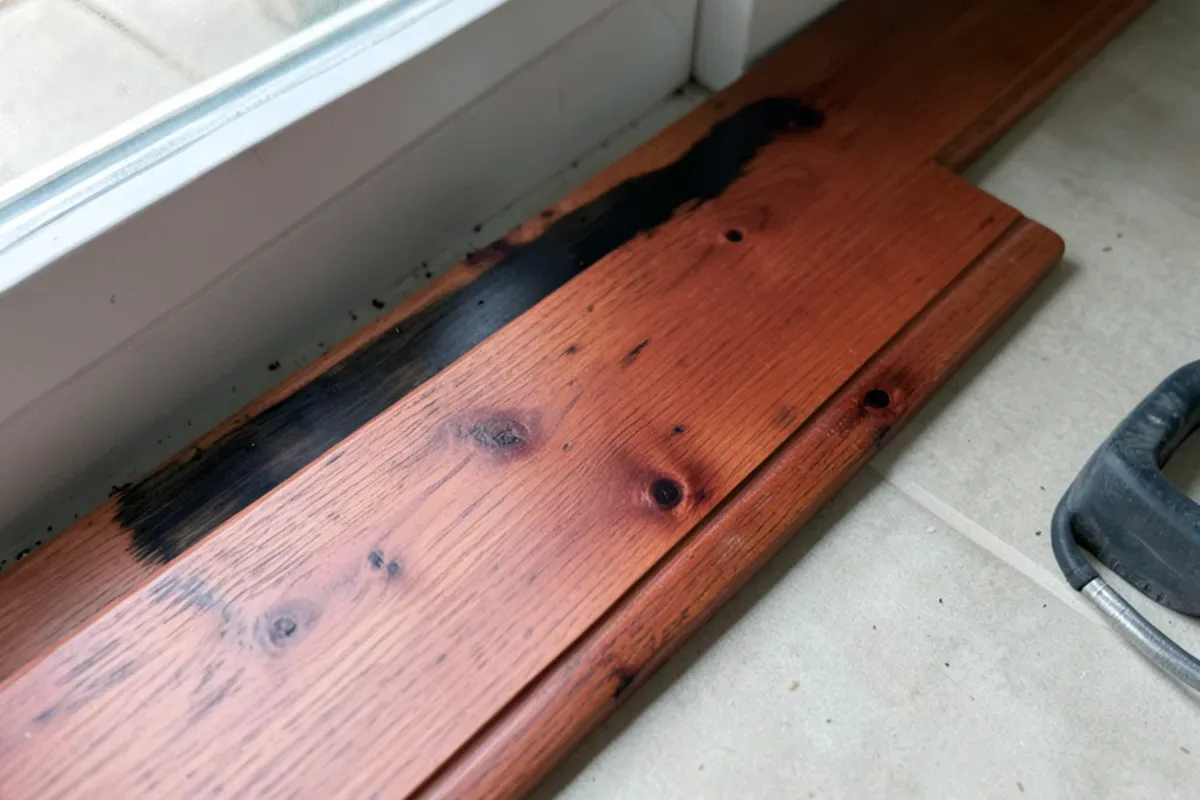
- Check doorways and sinks for black stains and gray, weathered wood, the usual signs of long water exposure.
Three or more clean results usually mean a refinish. A soft spot or deep black stain means at least some boards come out first.
Planning a Flooring Project?
Six Design Group designs and builds kitchens, baths and floors from Lake Highlands. Call to talk through your home and get a written scope.
- 34 Google reviews
- Design and build under one team
- Based in Lake Highlands, Dallas
- Mon–Fri 9 am–5 pm
When Should You Replace Hardwood Floors?
Replace hardwood when the damage is in the wood itself or the boards have no sanding life left. These are the usual reasons:
- Worn too thin. Tongues or nail heads showing at the surface mean previous sandings used up the wear layer.
- Water damage. Boards that stay cupped or crowned after drying, feel soft or show rot need replacing, at least in that area.
- Deep black stains. Pet urine and long-standing water react with tannins in oak and can stain deep into the board. Sanding often will not remove them; those boards are replaced.
- Thin engineered wear layers. Some engineered floors have a veneer too thin to sand at all.
- Structural problems. Squeaks, bounce or soft spots may point to subfloor issues that need opening up.
Often the answer is a mix: replace a damaged section, weave in matching boards, then refinish the whole room so it blends. Our hardwood flooring page covers new installation and repair.
Refinishing Options: Screen and Recoat vs Full Sand
Not every refinish needs a full sanding. The right level depends on whether the damage is in the finish or the wood.
| Option | What it fixes | What it does not | Disruption |
|---|---|---|---|
| Screen and recoat | Dull finish, light surface scratches | Deep scratches, stains, color change | About a day plus dry time |
| Full sand and refinish | Deep scratches, most stains, color change | Thin boards, rot, deep pet stains | Several days plus cure time |
| Partial replacement plus refinish | Damaged sections and overall wear | Floors without matching boards available | Longer, depends on repairs |
A screen and recoat only works when the existing finish is clean and compatible. Floors that have been waxed or treated with some polish products may not take a new coat without a full sand.
Choosing the finish
The finish decides the look, the smell during the job and how the floor wears. These are the common families, compared in relative terms:
| Finish type | Color effect | Odor and dry time | Wear and repair |
|---|---|---|---|
| Water-based polyurethane | Stays clear; keeps white oak pale | Low odor, fast recoat | Durable; scratches show less on matte sheens |
| Oil-modified polyurethane | Amber tone that deepens with age | Strong odor, slower dry | Durable, traditional look on red oak |
| Hardwax or penetrating oil | Natural, low-sheen look | Moderate odor | Wears softer but spot-repairs without a full sand |
| Moisture-cure urethane | Slight amber | Very strong odor; specialist product | Very hard; usually a professional-only choice |
Sheen matters as much as chemistry. Matte and satin hide dust, pet scratches and the fine texture of an older floor far better than gloss, which is why most refinishes we discuss land on one of them.
How Refinishing Hardwood Works, Step by Step
A full refinish follows a set sequence, and the National Wood Flooring Association publishes sanding and finishing guidelines that professional finishers work from. Here is what to expect:
- Move furniture out and protect cabinets, trim and doorways.
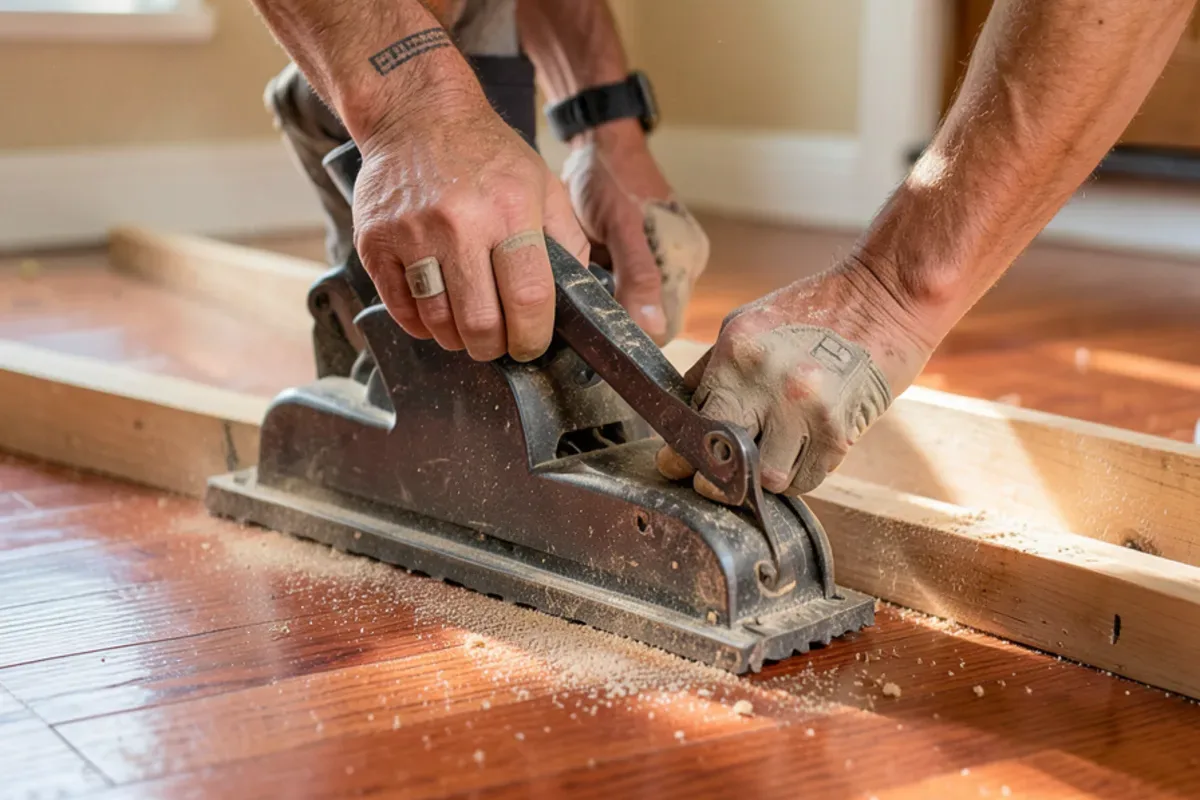
- Sand with progressively finer grits, with edgers along walls and hand work in corners.
- Vacuum and tack the floor to remove every bit of dust.
- Apply stain if you are changing color, after testing samples on the floor.
- Apply sealer and two or more coats of finish, with light abrasion between coats.
- Let the finish cure before rugs and heavy furniture return.
If your home was built before 1978 and the floor or nearby trim has old paint, the EPA's Renovation, Repair and Painting rule requires lead-safe practices when painted surfaces are disturbed. Our hardwood floor refinishing page explains dust control and finish options.
What Our Project Leads See in Farmers Branch and Richardson
Our project leads find that mid-century homes often hide the best floors. In Farmers Branch, the 1950s and 1960s ranch homes inside LBJ Freeway frequently have original oak strip floors, sometimes under carpet or vinyl. Those floors are usually solid wood with plenty of life left, and refinishing them is often the most cost-effective improvement in the house.
In Richardson, mid-century neighborhoods such as Richardson Heights and Cottonwood Heights have similar floors. The common complications are old pet stains near doors, water damage at kitchens and baths, and patches where walls were moved. Those are handled with selective board replacement before a full refinish.
Dallas humidity and the gaps between boards
Seasonal gaps are normal here, and they are not a reason to replace a floor. Hardwood Floors magazine, the National Wood Flooring Association's publication, notes that the association's guidelines call for 60 to 80°F and 30 to 50% relative humidity for wood floors to perform as intended. North Texas swings past that band: humid spring rains, then long air-conditioned summers and dry winter heating. Boards shrink in the dry months and close up again when humidity returns.
Gaps that stay open all year, or cupping that does not settle after a leak is fixed, are a different story. In older pier-and-beam houses, a damp crawlspace can cup a floor from below, so the crawlspace gets checked before any sanding. On slab homes, a slab leak under the floor can do the same thing, and that has to be found and repaired before boards are replaced.
What helps every homeowner decide:
- Pull up a corner of carpet in a closet to see what is underneath.
- Check the board edge at a floor register before assuming replacement.
- Ask for repair areas to be marked and priced separately from the refinish.
The Bottom Line on Refinishing vs Replacing
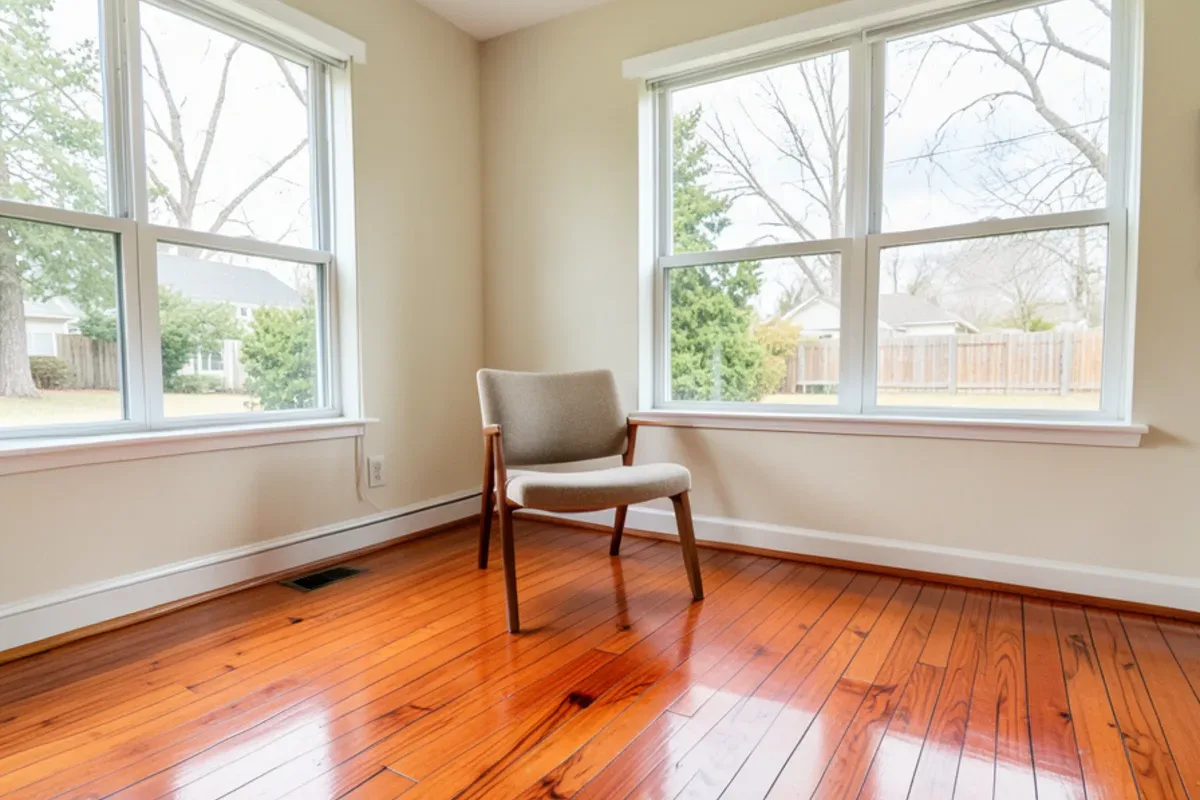
Refinish when the wood is sound and thick enough to sand; replace when the wood itself is damaged or worn through; combine the two when damage is local. Start with our hardwood floor refinishing service and request an estimate, or see hardwood flooring if new boards are part of the plan.
Quick Answers on Refinish Or Replace Hardwood Floors
How many sandings can an older oak floor survive?
Can a refinish switch my floor from red oak to a gray or natural tone?
Are seasonal gaps between hardwood boards a reason to replace the floor?
How soon can furniture go back on a freshly refinished floor?
Sources

Written by the Six Design Group team
Design-build remodelers based in Lake Highlands, Dallas. We plan and build kitchens, bathrooms, floors and whole-home remodels across Dallas-Fort Worth.