
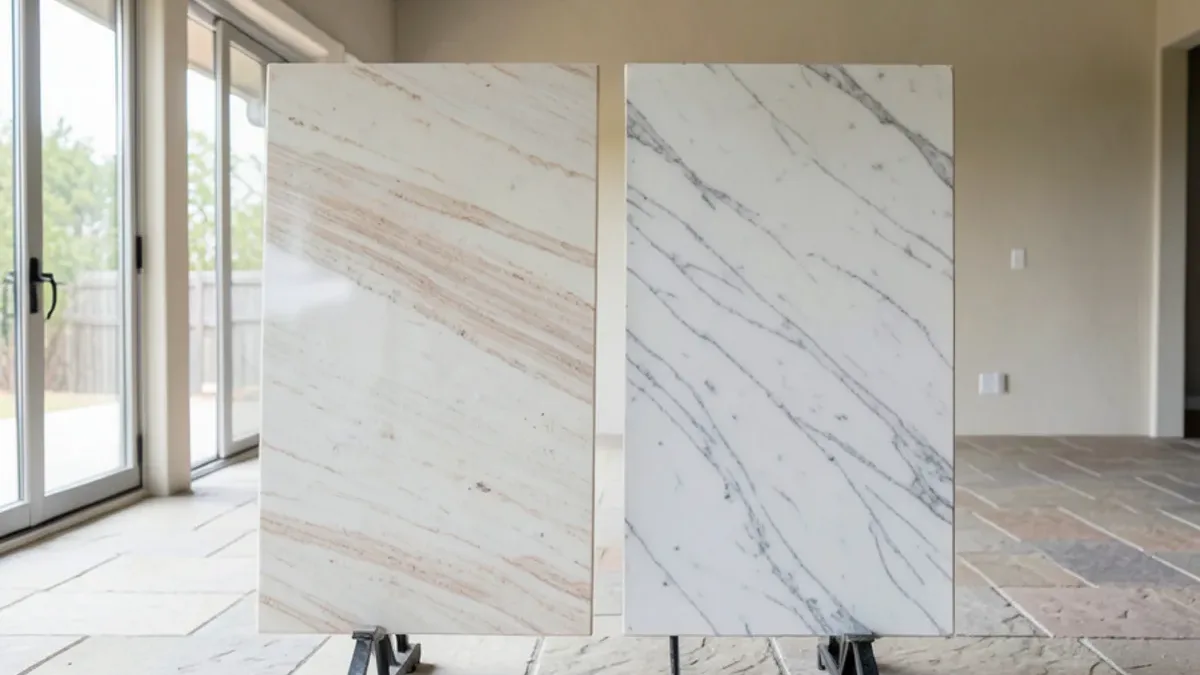
Quartzite vs marble is a choice between two stones that look alike and wear very differently. Marble is soft calcite that etches when acids touch it. True quartzite is fused quartz, far harder, and resists scratching and etching. For a white, veined counter that stays unmarked through daily cooking, quartzite is usually worth the extra cost.
How Are Quartzite and Marble Different?
They start as different rocks and end up with different minerals. That is the root of every practical difference.
Marble forms when limestone or dolostone is heated and pressed deep in the earth. Its main mineral is calcite (or dolomite), which reacts with acid. Quartzite forms when quartz-rich sandstone is heated and pressed until the sand grains fuse together. Its main mineral is quartz, which is hard and does not react with household acids.
| Property | Marble | True quartzite |
|---|---|---|
| Main mineral | Calcite or dolomite | Quartz |
| Mohs hardness | About 3 (dolomite 3.5 to 4) | About 7 |
| Etches from acid | Yes | No |
| Scratched by a steel knife | Yes | No |
| Needs sealing | Yes | Usually, varies by stone |
| Typical look | Fine, crisp veining | Softer, sometimes glassy veining |
Hardness is not the same as toughness. Quartzite's fused grains resist scratches, but the stone is brittle, so a sharp square edge can chip when a cast iron pan or a stool knocks it. An eased or slightly rounded edge holds up better. Marble chips too, but its scratches and etches can be honed out, which is far harder to do on quartzite.
Heat is close to a draw. Both are natural stones that tolerate a warm pan far better than resin-bound quartz, though a sudden temperature swing can still stress any slab at a seam or a sink cutout.
Planning a Countertops Project?
Six Design Group designs and builds kitchens, baths and floors from Lake Highlands. Call to talk through your home and get a written scope.
- 34 Google reviews
- Design and build under one team
- Based in Lake Highlands, Dallas
- Mon–Fri 9 am–5 pm
Which Is Better for a Kitchen: Quartzite or Marble?
For a working kitchen, quartzite is the more forgiving stone. It will not etch from a squeeze of lime, a splash of wine or a vinegar-based cleaner, and it resists knife scratches. Marble will show all three over time.
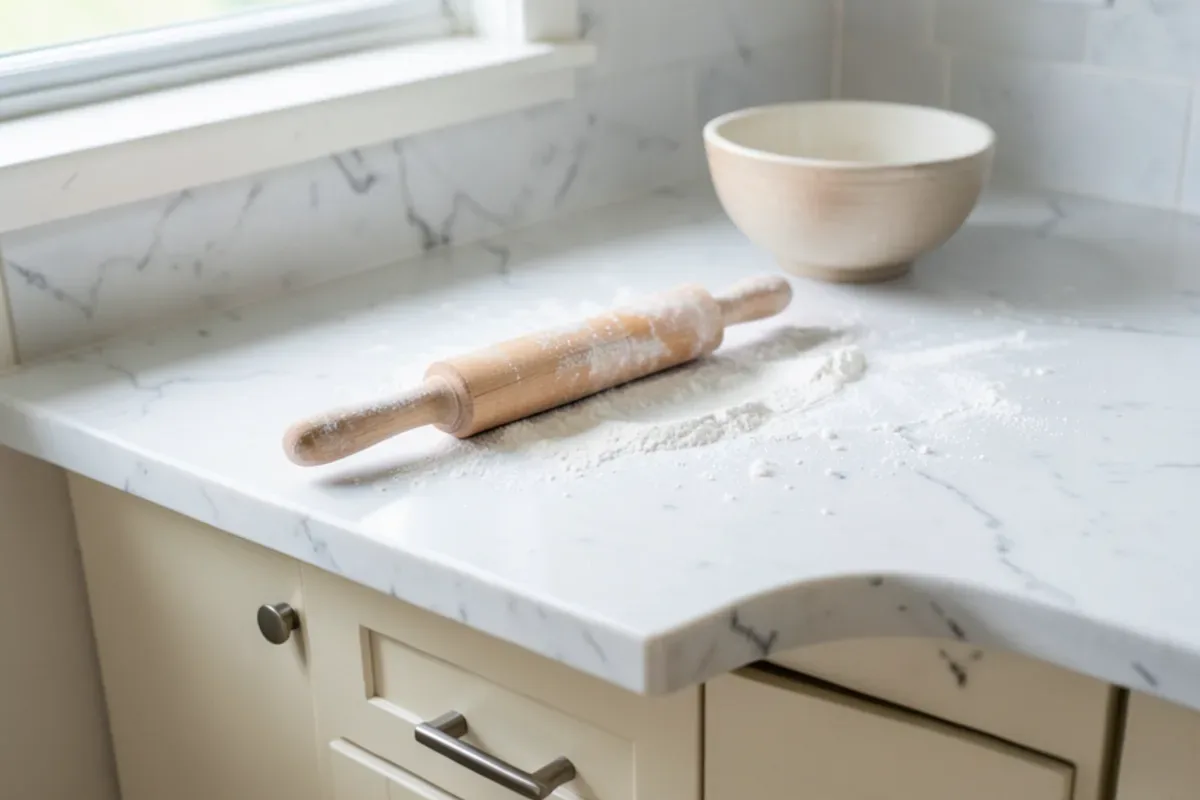
Marble still has a place. Many homeowners choose it because of how it ages, and a honed finish makes etching far less visible. It is also a classic choice for a baking area, where a cool, smooth surface helps with pastry. Our marble countertops page covers honed and polished options.
Match the Stone to the Kitchen
| Your kitchen | Better fit | Why |
|---|---|---|
| Daily cooking with citrus, wine and tomato | Quartzite | Will not etch from household acids |
| A baking station or a low-use bar | Marble | Cool, smooth and the etching matters less |
| Children doing homework at the island | Quartzite | Resists scratches from bags and toys |
| A historic home where patina suits the house | Marble | Ages like the original materials |
| Long runs with visible seams | Either, with careful layout | Veining has to be matched across slabs |
One misunderstanding is worth clearing up: sealing does not protect marble from etching. A penetrating sealer slows liquids from soaking in, which prevents stains, but acid still reacts with the calcite at the surface. A typical penetrating sealer does not change how quickly marble etches. Quartzite, by contrast, is sealed only against staining, since etching is not a concern for true quartz stone.
How Do You Test a Slab Labeled Quartzite?
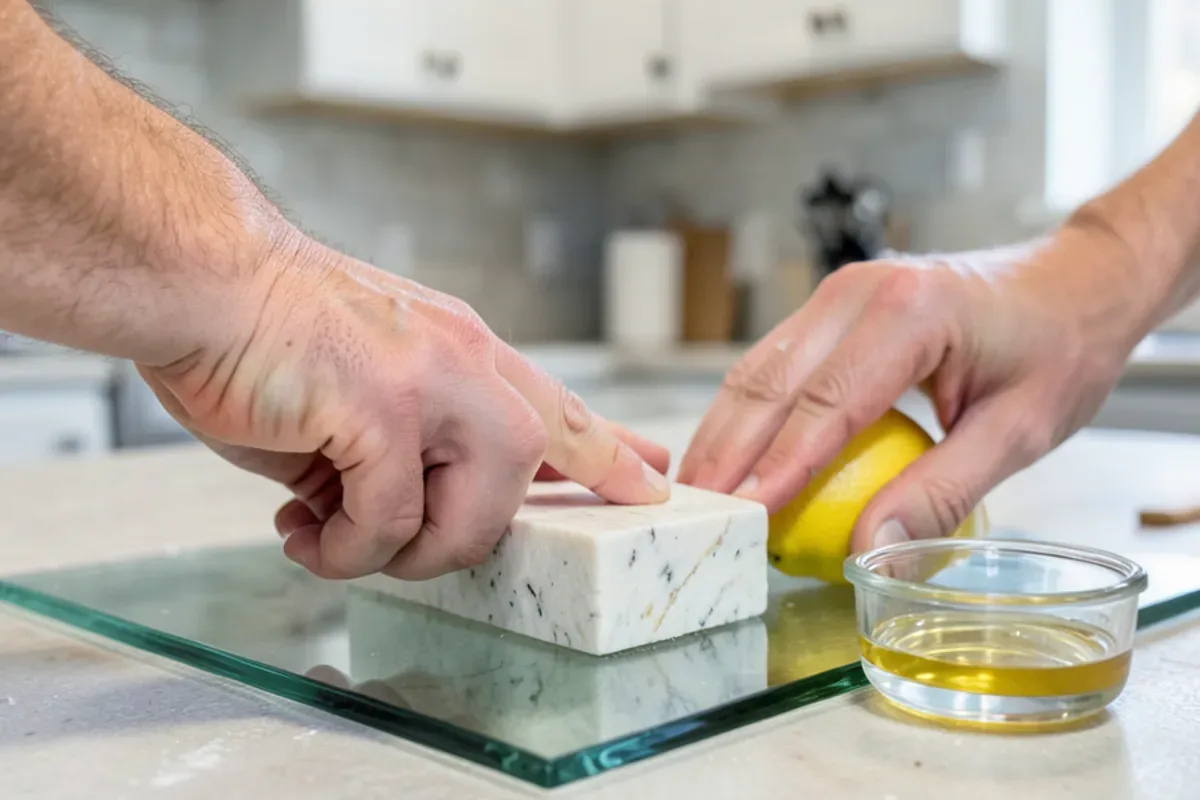
Test it, because some stones sold as quartzite are actually dolomitic marble or other softer stones. Ask the stone yard for a sample or an offcut, or permission to test an edge, and run three simple checks.
- Glass test. Drag a sharp corner of the stone firmly across a piece of glass, such as a glass tile. True quartzite is harder than glass and will scratch it. Marble will not.
- Knife test. Try to scratch the stone with the tip of a steel knife in an inconspicuous spot. A knife scratches marble and dolomite easily but will not mark true quartzite.
- Acid test. Put a few drops of vinegar or lemon juice on the polished surface and wait several minutes, then wipe and look at a low angle. A dull spot means the stone etches like marble.
If a slab fails any of these, treat it as marble for care and expectations, whatever the label says.
Patience matters on the acid test. Calcite marble reacts with vinegar quickly, but dolomite, the mineral in many "soft quartzites," reacts much more slowly, so a two-second check can give a false pass. Leave the drops for the full several minutes. Test more than one spot as well, since a single slab can include bands of different minerals.
Is Quartzite Worth the Price?
For many kitchens, yes, though both stones vary widely in cost. Popular quartzites such as Taj Mahal and white Brazilian varieties sit in the upper range of natural stone, and the hardness that makes quartzite durable also makes it slower to cut and polish, which adds fabrication time. Marble ranges from moderate for common white marbles to very high for rare Calacatta and Statuario grades.
Price is not the only factor. Consider the cost of living with each:
- Marble may need professional re-polishing over the years if etching bothers you.
- Quartzite needs periodic sealing but rarely needs refinishing.
- Both need careful slab selection and layout so veining flows across seams.
Fabrication is the other cost and safety factor. OSHA and NIOSH updated their hazard alert on countertop fabrication, reported by the American Industrial Hygiene Association in March 2026, noting that the highest silica levels appear in certain engineered stone and quartzite. That dust is a hazard for the people cutting the stone, not for anyone using a finished counter, and it is one reason quartzite should be cut wet in a shop with dust controls rather than trimmed dry in your kitchen.
Our quartzite countertops page explains how slab selection and templating work for natural stone.
What Our Project Leads See in University Park and Southlake
Our project leads see the quartzite-or-marble question come up most in high-end kitchens with white, veined designs. In University Park, pre-war Tudor and Colonial homes around SMU often suit the traditional look of marble, and owners there frequently choose it for an island or a butler's pantry while using quartzite for the main work surfaces.
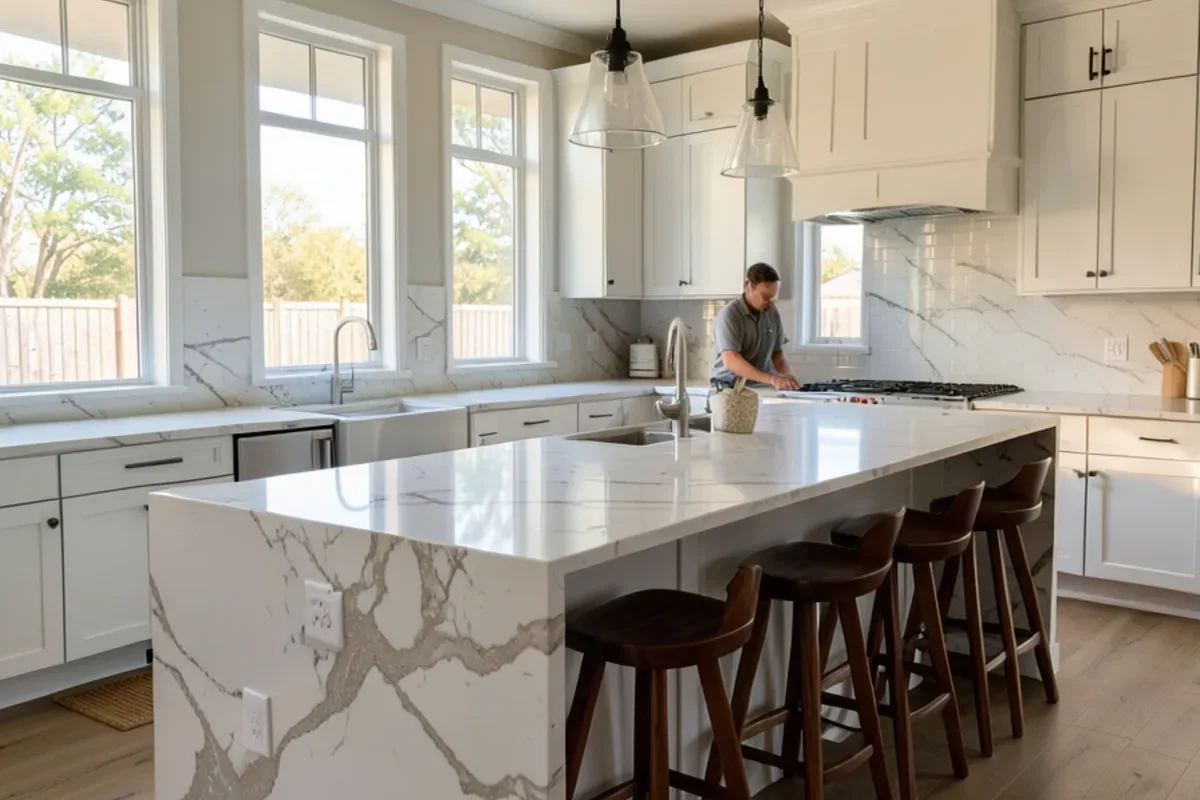
In Southlake, large custom homes around Southlake Town Square tend to have big islands and long perimeter runs. Quartzite is popular there because it handles heavy daily use, and the size of those islands makes slab selection and seam placement especially important.
One habit we encourage everywhere: see the full slab in person and tag the one you want before fabrication. Natural stone varies too much to buy from a photo.
The honest trade-off is that quartzite asks for more care at the start and marble asks for more acceptance over time. Quartzite costs more to cut and needs its edges chosen carefully. Marble is easier to fabricate and repair, but it will record every lime and glass of wine. Neither is wrong; the right one is the stone whose aging you can live with.
The Short Answer
Choose quartzite if you want marble's look with far less worry, and test the slab to be sure it is true quartzite. Choose marble if you love how it ages and are comfortable with etching. For a closer look at either stone, visit our quartzite countertops or marble countertops pages and schedule a consultation.
Quick Answers on Quartzite Vs Marble
How much harder is quartzite than marble in daily kitchen use?
Should a quartzite countertop be sealed like marble?
Can marble work on a busy kitchen island?
Does a honed or polished finish matter more on marble or on quartzite?
Sources

Written by the Six Design Group team
Design-build remodelers based in Lake Highlands, Dallas. We plan and build kitchens, bathrooms, floors and whole-home remodels across Dallas-Fort Worth.