
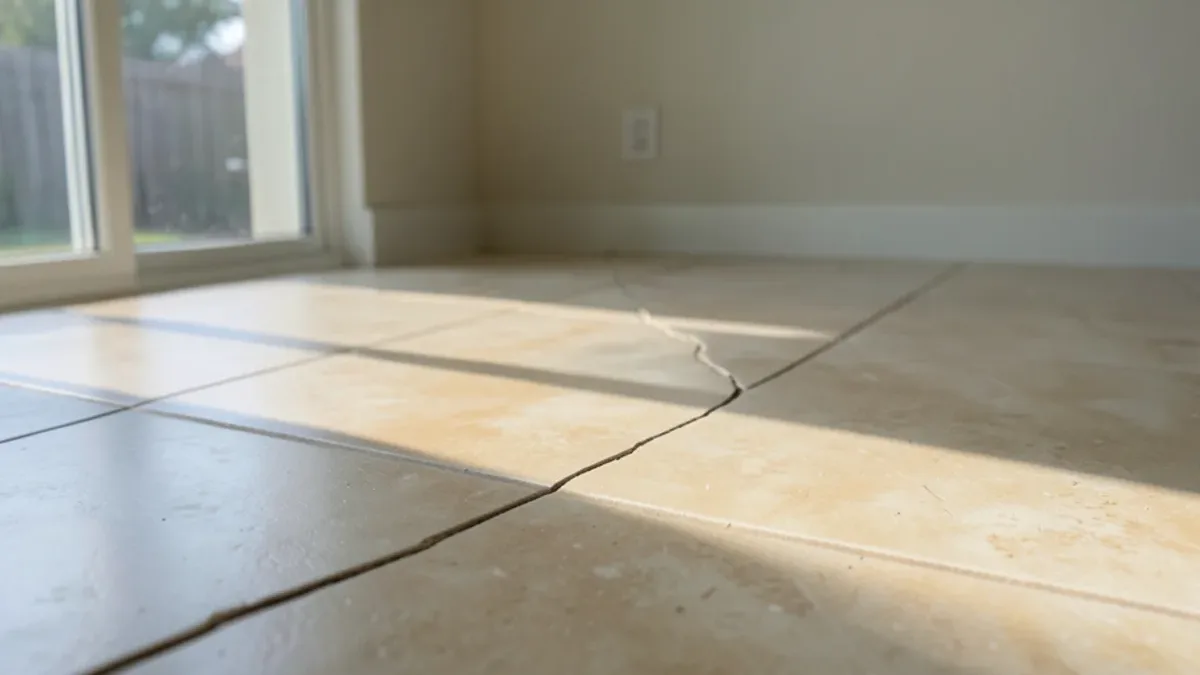
Tile cracking on clay soil in Dallas usually starts below the tile. North Texas sits on expansive Blackland Prairie clay that swells when wet and shrinks when dry, which flexes concrete slabs and opens hairline cracks. Rigid tile set directly over those cracks cracks with them. A crack-isolation membrane, properly placed movement joints and good mortar coverage prevent most of it.
Below: why the soil moves, how to read the crack in front of you, the three layers of protection, and the order of work on a clay-soil slab.
Why Does Dallas Clay Soil Move Slab Foundations?
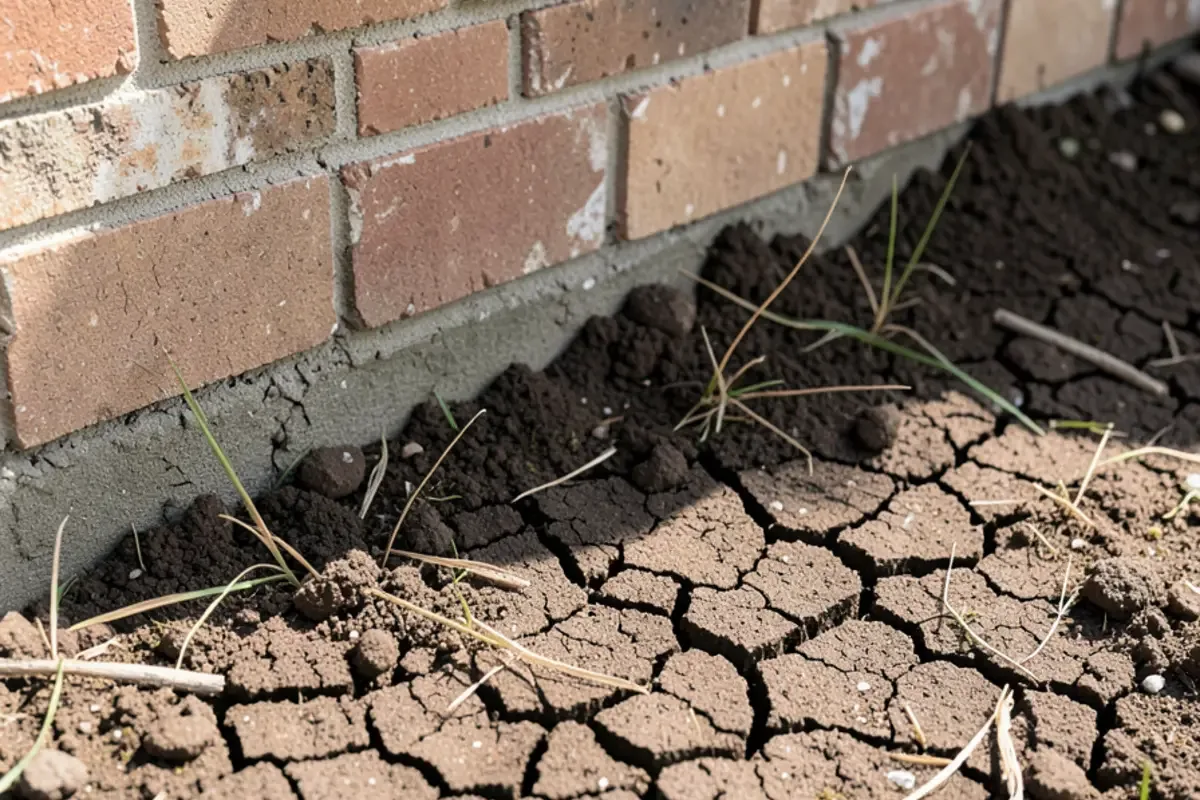
The clay under much of Dallas and its eastern suburbs is rich in minerals that absorb water and expand, then shrink and crack when they dry out. A wet spring can lift parts of a slab slightly; a hot, dry summer can let the edges drop as the soil shrinks away.
Most homes here are built on concrete slab foundations poured directly on that soil. The slab moves a little with the seasons, and concrete also shrinks as it cures, so nearly every slab has hairline cracks. Under carpet, nobody notices. Under tile, those cracks show up as lines running straight through several tiles.
The soil behind the problem
The signature soil of the Blackland Prairie is the Houston Black series, which the Texas Water Development Board describes as the unofficial state soil, spread across about 1.5 million acres from north of Dallas toward San Antonio. Its smectite clay swells when wet and shrinks when dry, and the USDA's official series description records cracks 1/2 inch to 4 inches wide at a foot deep during dry periods. The same description rates its shrink-swell potential high, which is the plain reason slabs here move more than slabs on sand or rock.
Not every lot sits on Houston Black, and fill soil changes things street by street. But across much of Dallas, Garland and Mesquite, the floor you install is sitting on ground that changes volume every season.
Planning a Flooring Project?
Six Design Group designs and builds kitchens, baths and floors from Lake Highlands. Call to talk through your home and get a written scope.
- 34 Google reviews
- Design and build under one team
- Based in Lake Highlands, Dallas
- Mon–Fri 9 am–5 pm
How Slab Movement Cracks Tile
Tile and grout are rigid, so they cannot stretch when the concrete beneath them opens or shifts. Movement reaches the tile in three common ways:
- Existing slab cracks. Hairline cracks open and close slightly through the seasons. Tile set right over them cracks along the same line.
- No room at the edges. Tile grouted tight against walls has nowhere to expand. Under heat and movement it can tent, lifting off the floor in a ridge.
- Poor mortar coverage. Tile set on dabs of mortar has hollow spots that crack under load, and small slab movement makes it worse.
Large-format tile is more sensitive to all three, because a long tile bridges more of the slab and needs a flatter surface to bond fully.
How to Read the Crack in Front of You
The pattern of a crack usually says more than its size. Use this table to sort what you see before anyone quotes new tile:
| What you see | Likely cause | Next step |
|---|---|---|
| One straight hairline crack through several tiles | Slab shrinkage or a seasonal hairline crack underneath | Map it; plan a crack-isolation membrane over it |
| Cracks in grout only, tiles intact | Grout shrinkage or minor movement | Regrout or reseal; the slab may be fine |
| Hollow sound when tapping, corner cracks | Poor mortar coverage or bond failure | Replace those tiles with full coverage |
| A ridge of tiles lifting in the middle of a room | Tenting from no perimeter or field joints | Remove the ridge and add movement joints |
| One side of a crack higher than the other | Vertical slab movement | Foundation evaluation before any new floor |
| Cracks widening month to month, doors sticking | Active foundation movement | Structural engineer or foundation specialist first |
The first four rows are flooring problems. The last two are foundation problems that show up in the floor, and new tile laid over them will crack again.
What Prevents Tile Cracking on Dallas Clay Soil Slabs?
Three layers of protection work together: a crack-isolation membrane, movement joints and full mortar coverage. None of them fixes an active foundation problem, but together they handle normal seasonal slab movement.
Crack-isolation membranes. These thin sheet or liquid-applied membranes go between the slab and the tile and let the slab move a little underneath without passing that stress up. Look for membranes tested to ANSI A118.12, the standard for crack isolation, which defines standard and high-performance levels. Some are installed only over individual cracks; whole-floor coverage protects against cracks that appear later.
Movement joints. The TCNA Handbook's method EJ171 calls for flexible joints, filled with sealant rather than grout, at these locations:
- Around the perimeter of the room and at columns, cabinets and other fixed objects
- Over any existing expansion, control or cold joints in the slab
- In the field of large floors, about every 20 to 25 feet in each direction indoors
- More closely, about every 8 to 12 feet, where tile gets direct sun or moisture
Mortar coverage. Industry installation standards call for at least 80 percent mortar contact in dry interior areas and 95 percent in wet areas. Back-buttering large tiles and checking coverage by lifting a tile during installation are how installers confirm it.
Tile Installation Steps on a Clay-Soil Slab
Here is the order of work for a floor on a moving slab, in plain terms.
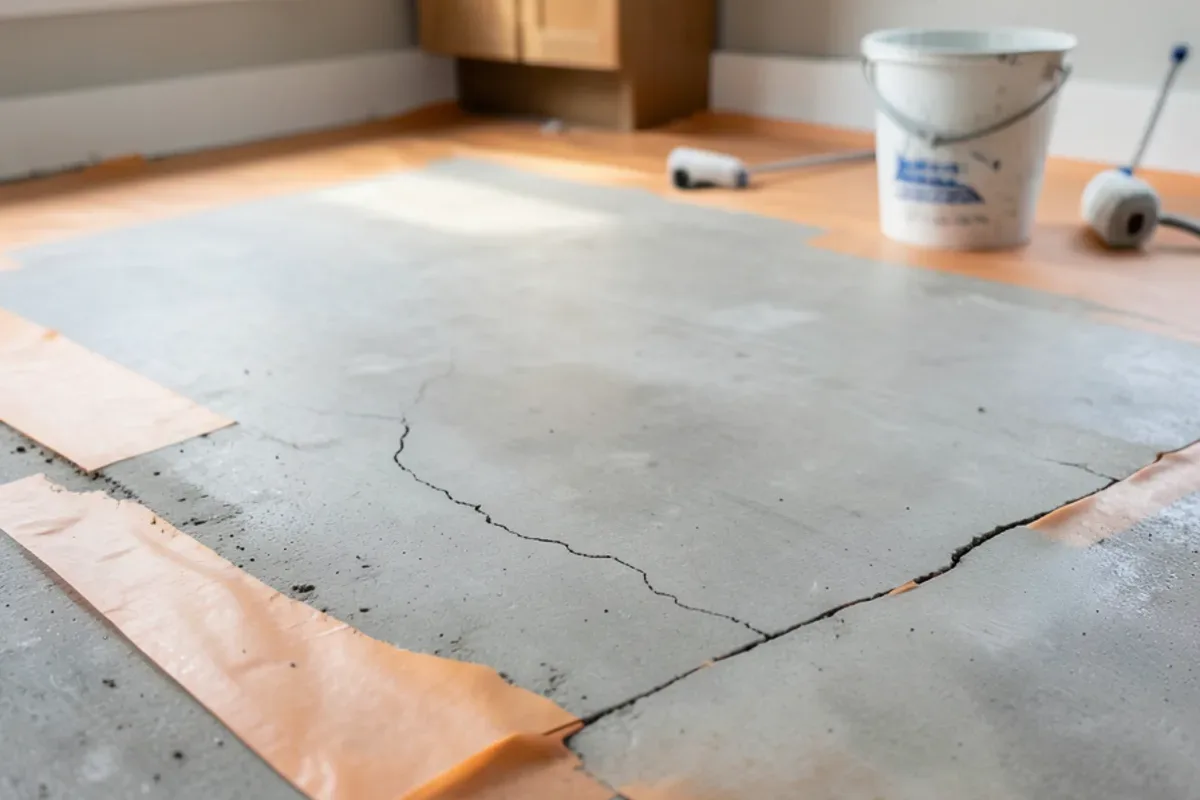
- Remove old flooring and mortar down to clean concrete.
- Inspect and map every crack. Cracks with vertical offset are flagged for a foundation evaluation before going further.
- Grind high spots and fill low spots so the slab is flat enough for the tile size.
- Install the crack-isolation membrane over cracks or across the whole floor.
- Lay out movement joints, including any slab joints, so they fall on grout lines.
- Set tile with full mortar coverage and leave perimeter gaps under the baseboard.
- Grout, then fill movement joints with flexible sealant colored to match.
Our tile flooring page covers the floor work, and our bathroom tile page covers showers and bath floors, where waterproofing is added to the same steps.
What Our Project Leads See on Dallas, Garland and Mesquite Slabs
Our project leads see the same pattern across the east side of the metro. In Dallas, especially older neighborhoods on expansive clay, slabs from the 1950s and 1960s often carry decades of hairline cracks, and those cracks tend to reappear in floors laid without a membrane. In Garland and Mesquite, 1960s to 1980s brick homes often still have older ceramic tile, and a crack tracking straight across the room is a familiar sight.
What we tell homeowners:
- Map the cracks when the old floor comes up. Their direction and width say a lot.
- Fix foundation problems first. New tile will not hide a slab that is still moving.
- Keep soil moisture around the foundation steady through summer; dramatic dry spells increase movement.
- Expect movement joints to be visible as sealant lines. They are a sign the job was done right.
One more caution applies when a floor project includes plumbing. Many North Texas homes built in recent decades sit on post-tensioned slabs, which hold steel tendons under high tension inside the concrete. Cutting into one to move a drain or anchor a fixture without locating the tendons first is dangerous and can damage the slab. Older slabs are usually conventionally reinforced, but the type should be confirmed before any saw touches the concrete.
The honest trade-off we discuss is cost against risk. A whole-floor membrane adds material and a day of work, and on a sound, crack-free slab it is insurance you may never need. On a 1950s slab with a map of old cracks, it is the difference between a floor that lasts and one that cracks along the old lines within a few seasons.
Building Tile Floors That Last on Clay
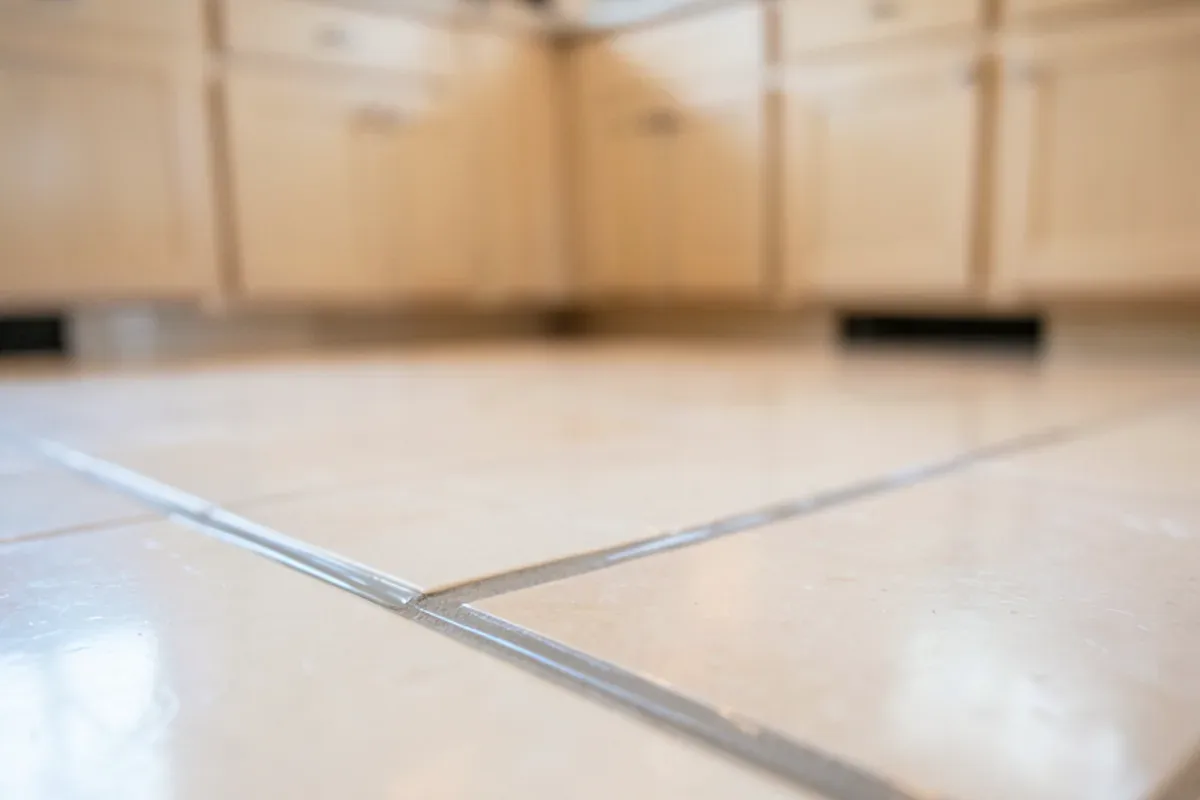
Tile cracks on Dallas slabs because rigid material is adhered to concrete that moves. Decouple the tile with a membrane, give the floor room to move with joints, and bond each tile fully, and most floors stay intact for decades. To compare materials for a slab home, start with our flooring services.
Quick Answers on Tile Cracking Clay Soil Dallas
Will a crack-isolation membrane stop all tile cracks?
Is the cracked tile a sign of foundation trouble?
Should the foundation be repaired before new tile goes down?
Should I choose LVP instead of tile on a moving slab?
Sources

Written by the Six Design Group team
Design-build remodelers based in Lake Highlands, Dallas. We plan and build kitchens, bathrooms, floors and whole-home remodels across Dallas-Fort Worth.